Most software projects that run over budget don’t fail in the code. They fail earlier, when a team starts building before anyone has agreed on the problem the software solves, who will use it, and what “done” looks like. A software discovery phase is the step that closes that gap.
In short, discovery is a focused period before design and development where you and the development team research the problem, define the scope, choose the architecture and estimate the work. You come out of it with documents and prototypes a team can build from, plus a budget and timeline grounded in real information.
This guide is for founders and operations or marketing leads about to commission custom software. You’ll learn what happens during discovery, which deliverables to expect, who needs to be involved, and how to spot a discovery that is too thin to protect you.
What a software discovery phase is
A software discovery phase (also called a project discovery phase or scoping phase) is the research and planning work that happens before anyone writes production code. Its job is to turn an idea, or a long wish list, into a plan that a team can estimate, design and build with confidence. It is the foundation of sound software project planning.
The UK Government’s service manual states the principle plainly: before you commit to building a service, you need to understand the problem it should solve, and you should not start building the service during discovery (GOV.UK Service Manual). Nielsen Norman Group describes discovery as research into the problem space, aimed at understanding users, problems and constraints before a team commits to a direction (Nielsen Norman Group).
Discovery is not a sales call or a free estimate, and it is not a specification of every screen. Its purpose is to remove the biggest unknowns.
What happens during discovery
Most discoveries cover the same core activities.
1. Stakeholder interviews and business goals
The team interviews the people who own the budget, the process and the outcome, and agrees on what success means in measurable terms, such as fewer manual hours per order. If the founder and the head of operations describe the project differently, this is where it surfaces.
2. User research and journey mapping
Next come the people who will use the software every day. Short interviews and a walkthrough of how they work today reveal the steps that waste time. The output is a user journey map showing each step, what users need, and where things break.
3. Auditing what already exists
Few projects start from zero. There is usually a spreadsheet, a legacy system or a CRM in the picture. The team reviews these to find data that must be migrated, integrations that must keep working, and constraints such as compliance rules. A booking tool that must sync with an existing accounting system needs a different architecture, and you want to know that in week one.
4. Defining scope and priorities
With goals and users understood, the team turns the wish list into a prioritized feature list. A common method is MoSCoW: Must have, Should have, Could have, Won’t have this time. The Must haves become the first release, which is often an MVP. Our guide to MVP development for startups covers how to keep that first release small.
5. Technical architecture
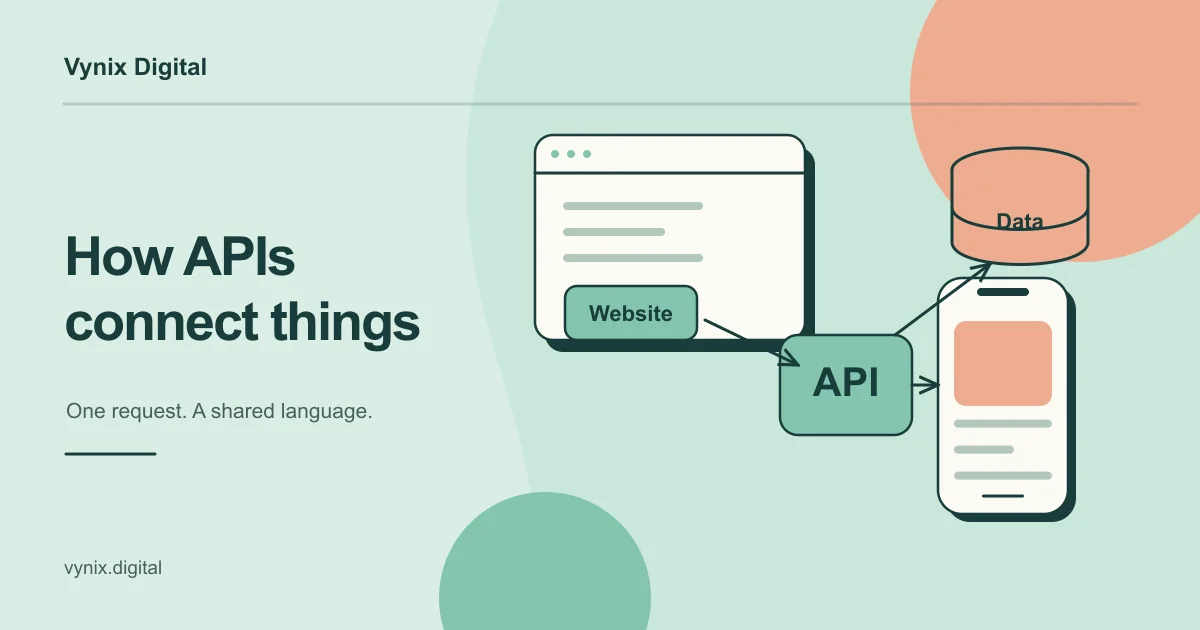
Here the developers decide the stack, how data is structured (the database schema), which third-party services to use, and how the system is hosted and secured. These choices are hard to reverse later. For backends, APIs and SaaS platforms, this is where custom software development work really begins.
6. Wireframes or a clickable prototype
Wireframes are simple layouts of key screens that show structure and flow without visual polish. A rough prototype tested with a few real users catches confusing flows before anyone writes code. This step overlaps with the early stages of a UI/UX design process, and it is where a UI/UX design specialist earns their place on the team.
7. Estimates, risks and a roadmap
Finally, the team estimates the work feature by feature, lists the main risks with a plan for each, and lays out a phased roadmap. With a defined scope, that estimate is far more reliable than one written from a short brief.
Discovery phase deliverables
These are the discovery phase deliverables you should expect. The depth of each one scales with the size of the project.
| Deliverable | What it contains | Why it matters |
|---|---|---|
| Project brief | Goals, success metrics, target users, constraints | Ties later decisions to a business outcome |
| User personas and journey maps | Who uses the product and the steps they take | Stops the team designing for imagined users |
| Prioritized feature list | Features grouped by priority, first release marked | Controls scope and budget |
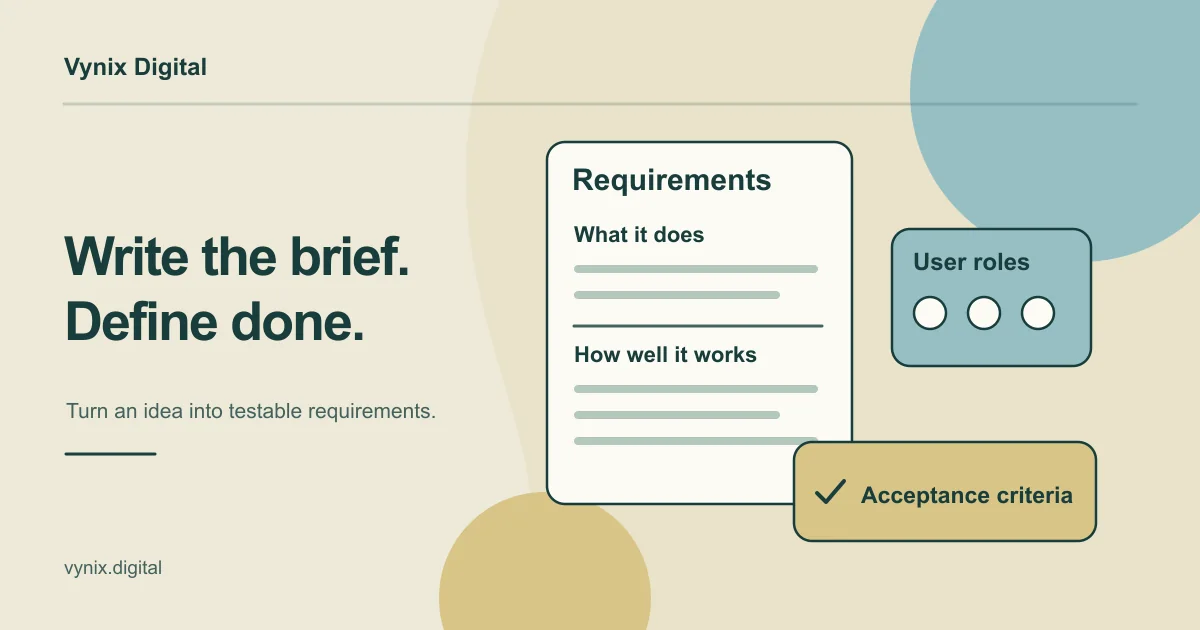
| Requirements document | Functional and non-functional requirements, user stories, acceptance criteria | Gives developers and testers a shared definition of done |
| Technical architecture | Stack, database schema, integrations, hosting, security approach | Prevents expensive rework later |
| Wireframes or prototype | Key screens and user flows | Lets you test the flow before paying for the build |
| Estimate and roadmap | Effort per feature, phases, milestones, team | Makes budgeting realistic |
| Risk register | Known risks, likelihood, mitigation plan | Fewer surprises mid-project |
A small internal tool might need only a short brief, a schema and a few wireframes, while a SaaS platform needs all of them in detail. For the requirements piece, see our guide to writing a software requirements document.
Who should be involved
Discovery works best with a small group of people who can make decisions. Nielsen Norman Group suggests a multidisciplinary team of roughly 3 to 7 people, including a researcher, a facilitator, a sponsor and someone technical (Nielsen Norman Group). In a client and agency setup, that usually means:
- Your side: a decision maker who owns the budget, a product owner who stays involved throughout, and one or two people who know the day-to-day process.
- The development side: a project manager to run sessions and document decisions, a technical lead, and a UX designer. Larger projects often add a business analyst.
The most common gap is the missing end user. Without them, discovery is built on what managers think happens, which is often not what actually happens.
How discovery reduces risk and cost later
Changes are cheap on a whiteboard and expensive in code. Moving a button in a wireframe takes minutes, while changing how data is stored after launch can mean migrations and rewrites. Discovery front-loads the decisions that are most painful to change.
It lowers risk in a few concrete ways:
- Fewer scope surprises. Integrations, data migration and compliance needs show up before the contract is signed.
- Better estimates. A team that has mapped the features and architecture needs far less padding.
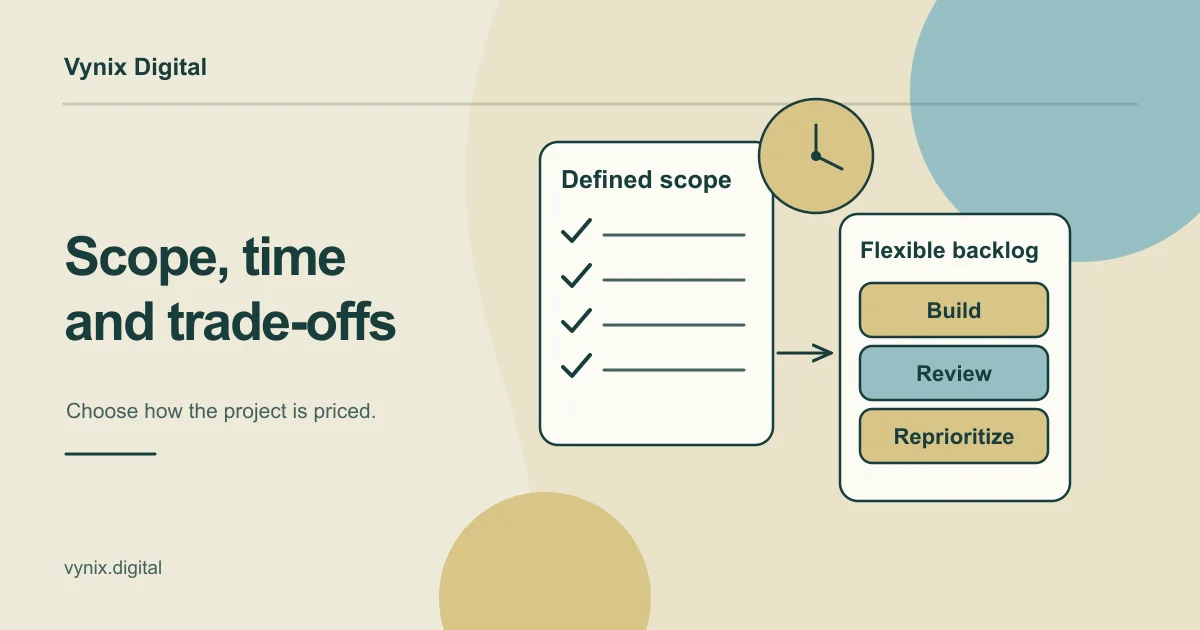
- A real choice of contract model. Once scope is clear, a fixed price for a defined first phase becomes realistic. Our comparison of fixed price vs time and materials explains when each fits.
- Permission to stop. GOV.UK notes that stopping at the end of discovery is not a failure if the research shows that is the right call. Sometimes the answer is an existing product, which is the decision we cover in custom software vs off-the-shelf.
- A portable plan. If you pay for discovery and own the documents, you can take them to another team.
On length, GOV.UK says around 4 to 8 weeks is typical for its own service discoveries. A focused internal tool can usually be scoped faster.
Red flags in a weak discovery
Watch for these signs that a discovery is too shallow to rely on:
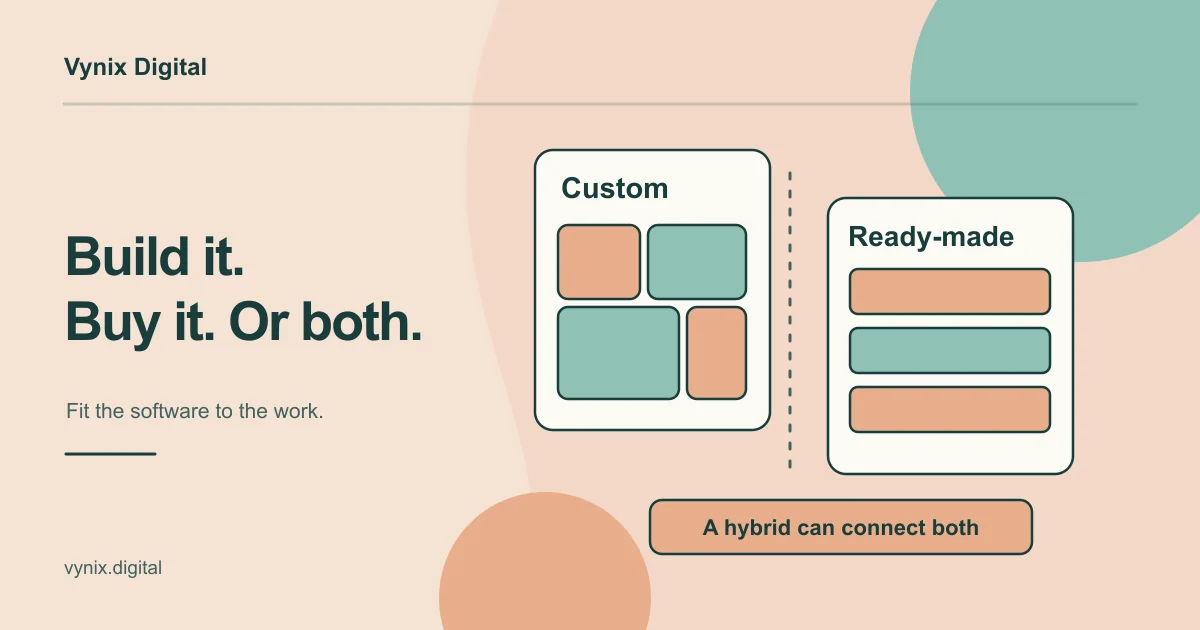
- Nobody talks to real users, and all input comes from one stakeholder.
- The output is a slide deck with no requirements, data model or wireframes.
- The estimate is one total number with no breakdown by feature.
- Architecture is left as “we’ll figure it out during development.”
- The risk list is empty, which means nobody looked.
- Every feature on your wish list is marked as a Must have.
- The team picks its favorite stack before hearing your requirements.
Common mistakes
Clients can weaken a good discovery too. These come up most often:
- Arriving with a fixed solution. “We need an app” is a solution. GOV.UK recommends reframing a predefined solution as a problem, so start with what is going wrong and for whom.
- Sending someone who can’t decide. If every question waits a week for approval, discovery stalls.
- Skipping it for small projects. A shorter discovery is fine. No discovery usually means the same questions get answered later, in code.
- Expecting a final price first. A reliable fixed price comes out of discovery, not before it.
- Not reviewing the output. Read the requirements, click through the prototype and question the estimate before you sign off.
Plan before you build
A software discovery phase is the cheapest point in a project to change your mind. Done well, it gives you a clear scope, a sound architecture, tested wireframes and an estimate built on real information. Skip it, and the same questions still need answers, only later and at a higher cost.
At Vynix, discovery and architecture is the first stage of every custom software development project. We define the stack, design the database schemas and wireframe the user journey before design and development begin, and we agree the timeline at that point. If you have a project in mind and want to scope it properly, tell us about it on our contact page.