You have a software project in mind, a few agency proposals in hand, and two very different pricing structures on the table. One quotes a single number for the whole build. The other quotes hourly or daily rates plus an estimate. Of all the software development pricing models, these two cover most agency deals, and the choice decides who pays when plans change.
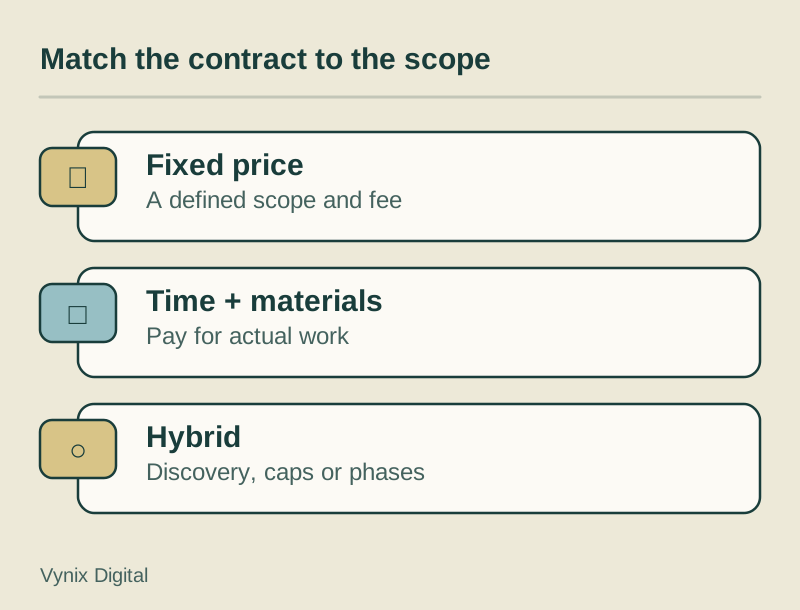
The short answer on fixed price vs time and materials: fixed price suits small, well-defined projects where the scope will not move. Time and materials suits products where you expect to learn and adjust as you build. Many teams get the best of both with a hybrid, such as a fixed-price discovery phase followed by time and materials delivery.
This guide is for founders and operations leads buying custom software. It covers how each model works, a side-by-side comparison, the hybrids worth knowing, and the contract clauses to check before you sign.
How a fixed price contract works
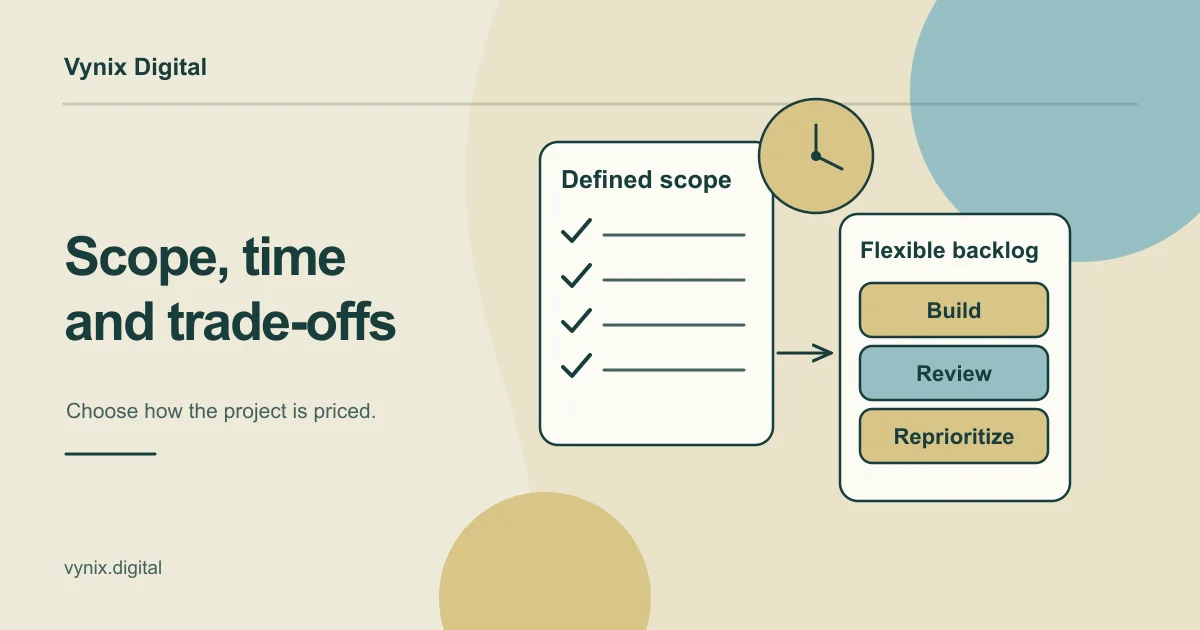
In a fixed price contract, the vendor agrees to deliver a defined scope for a set fee, usually paid in installments tied to milestones. The scope is written down in detail, and anything outside it is handled as a change request with its own price.
The appeal is clear: you know the number before work starts, which makes budgeting and internal approval easier. The catch is that the vendor now carries the estimation risk. If the estimate turns out low, they lose money, so a sensible vendor adds a buffer to the quote. You pay for that buffer whether or not the risk shows up.
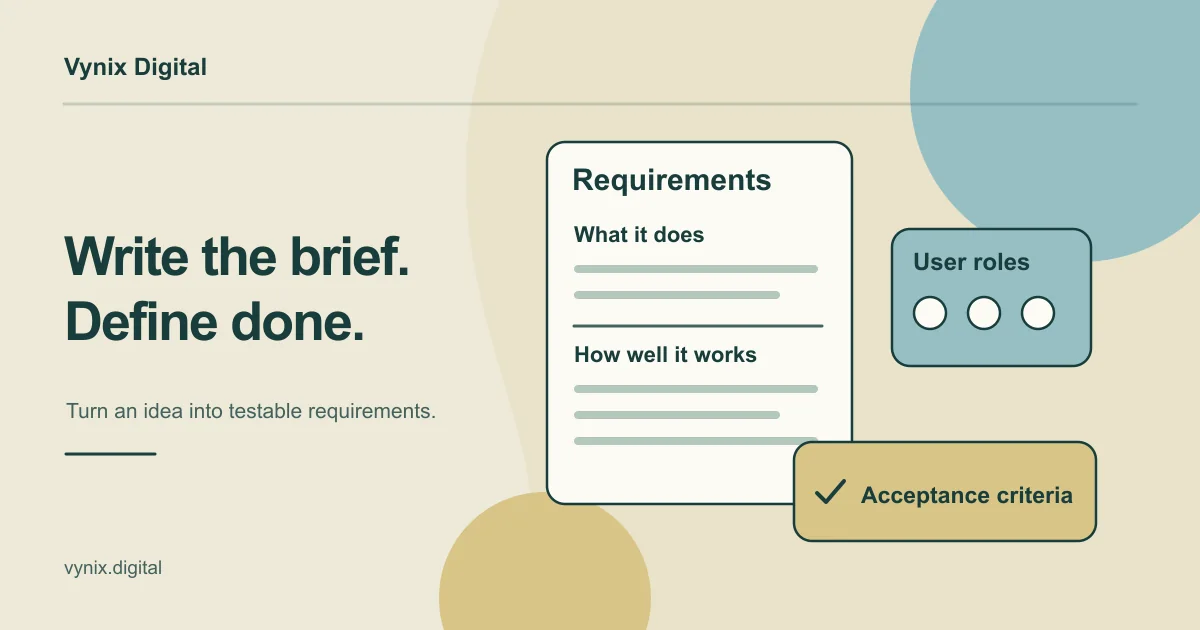
Fixed price also depends on a precise specification. If the requirements are vague, both sides end up arguing over what was “included.” A clear software requirements document is the foundation of any fixed-price deal.
How a time and materials contract works
In a time and materials contract, you pay for the hours the team actually works (the “time”) at agreed rates, plus direct costs such as licenses, hosting, or third-party services (the “materials”). The vendor gives an estimate, but the final bill reflects the work done.
This model fits projects where the scope is expected to evolve. You can reorder priorities after each sprint, drop features that testing shows nobody needs, or add an integration a customer asked for, all without renegotiating the contract. The Agile Manifesto values “customer collaboration over contract negotiation” and “responding to change over following a plan” (Agile Manifesto). Time and materials is the commercial model that makes that way of working practical.
The trade-off is budget certainty. You carry the risk of the estimate being wrong, so you need visibility: timesheets, sprint reports, and a regular check of spending against the remaining backlog.
Fixed price vs time and materials: side-by-side comparison
| Factor | Fixed price | Time and materials |
|---|---|---|
| Who carries cost risk | Mostly the vendor (priced in as a buffer) | Mostly the client |
| Budget certainty | High, as long as scope holds | Lower, depends on estimate accuracy and tracking |
| Flexibility | Low, changes go through change requests | High, priorities can shift sprint by sprint |
| Handling scope change | Formal change order, re-quoted, often slow | Added to the backlog and estimated as normal work |
| Upfront effort | Heavy, a detailed spec is needed before signing | Lighter, a prioritized backlog and clear goals are enough to start |
| Admin overhead | Change control, acceptance criteria, formal sign-offs | Timesheets, progress reports, budget monitoring |
| Speed to start | Slower, because scoping comes first | Faster, work can begin once priorities are set |
| Best for | Small, well-understood builds | Evolving products, MVPs, long-term work |
Fixed price does not mean cheaper. It means predictable. On a project with many unknowns, the buffer can be large, or the vendor may stick to the letter of the spec, so you get what was written rather than what you needed.
Hybrid models worth considering
Most real projects are neither fully defined nor fully open-ended, so hybrids are common.
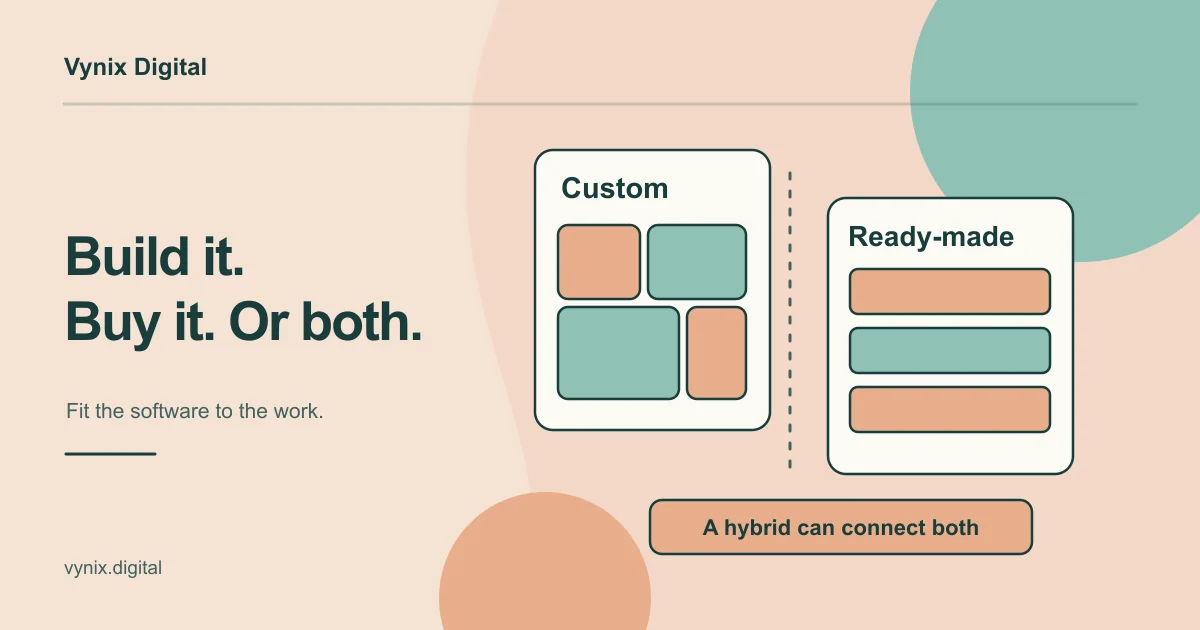
Fixed-price discovery, then time and materials
You pay a fixed fee for a short software discovery phase covering requirements, architecture, wireframes, and an estimated backlog. The build then runs on time and materials. You limit your first commitment, get an estimate grounded in real analysis, and can take the discovery output to another vendor if the fit is wrong. This mirrors the discovery-first process most custom software development teams follow anyway.
Capped time and materials
You pay for actual hours, but with a ceiling (a “not to exceed” amount) for a defined scope or period. As the team approaches the cap, they must flag it and agree next steps with you before going over. You keep the flexibility with a firm upper limit, and a cap works best when the scope is clearly prioritized.
Milestone-based fixed price
The project is split into phases, each with its own fixed price and acceptance criteria. Phase two is priced after phase one is delivered, so later estimates benefit from what the team learned. This suits clients who need budget approval in stages.
Retainer or dedicated team
For ongoing product work, some clients reserve a set amount of team capacity each month. It is time and materials in structure, with a predictable monthly cost, and suits the steady stream of improvements that follows launch.
Which model fits which project
Use fixed price when:
- The scope is small and clearly specified, such as a single integration, a defined module, or a simple internal tool.
- Requirements are unlikely to change during the build.
- You need a fixed number for a grant, a board approval, or a procurement process.
Use time and materials when:
- You are building a new product and expect to learn from users. Our guide to MVP development for startups explains why early scope rarely holds.
- The project depends on third-party systems or data you cannot fully inspect upfront.
- You want to stay involved in prioritization and can review progress every week or two.
Use a hybrid when:
- You have a clear goal but an unclear solution. Fixed-price discovery followed by time and materials is often the most sensible path for custom software.
- Your finance team needs a ceiling but your product team needs room to adjust. Capped time and materials covers both.
A quick example: a logistics company wants an internal dashboard that pulls data from two known systems and produces a fixed set of reports. That is a good fixed-price candidate. A startup building a customer-facing SaaS platform, still testing pricing and onboarding, is better served by discovery plus time and materials, because the backlog will look different after the first round of user feedback.
Contract clauses worth checking
Whichever model you choose, read these sections closely. This is general guidance, not legal advice, so have a lawyer review any contract before you sign.
- Scope and acceptance criteria: what counts as “done” for each deliverable, and how long you have to test and accept it.
- Change request process: how changes are requested, estimated, approved, and priced.
- Rates and rate changes: the rate for each role, whether rates can rise during the contract, and with how much notice.
- Estimates and caps: whether estimates are binding, what happens when spending nears a cap, and who must approve overruns.
- Reporting: how often you receive timesheets, progress updates, and budget reports.
- Payment terms: milestones, invoicing frequency, and what happens if a milestone is disputed.
- Intellectual property: when ownership of the code passes to you (often on payment) and whether you get full repository access throughout.
- Warranty: how long defects are fixed at no cost after delivery, and what counts as a defect rather than a new feature.
- Termination and handover: your right to end the contract, notice periods, and what the vendor must hand over, including code, documentation, and credentials.
Common mistakes
- Choosing fixed price for a project that is still being figured out. You end up paying for change requests or receiving a product that matches the spec but not the need.
- Signing a time and materials deal with no reporting or budget checkpoints. Flexibility without visibility is how budgets drift.
- Comparing quotes on the headline number alone. A low fixed price with a thin spec often costs more once change requests start.
- Skipping discovery to save time. Building on assumptions leads to rework that usually costs more than discovery would have.
- Treating an estimate as a promise. An estimate is a forecast, so ask how it was built and which assumptions it rests on.
- Ignoring handover terms. If you cannot get your code and credentials out cleanly, switching vendors later becomes painful.
Pricing is only one part of choosing a partner. Our guide to software development outsourcing covers vetting vendors and structuring the relationship.
Choosing the model that fits your project
Neither model wins in general. Fixed price buys predictability when scope is truly stable. Time and materials buys flexibility when you expect to learn as you build. For most custom software, a fixed-price discovery phase followed by time and materials, with a cap or regular budget reviews, balances both.
At Vynix Digital, every project starts with discovery and architecture, where the stack and timeline are agreed before the build begins. If you are planning a backend, SaaS platform, API, or internal tool, take a look at our custom software development services and browse our recent work, then get in touch to discuss your project and which pricing approach suits it.