Hiring developers is slow and expensive, and many companies need software built before they can justify a full in-house team. Software development outsourcing means hiring an outside company or individual developers to design, build, or maintain that software for you. Done well, it gives you skilled people quickly and lets you scale the team up or down as the work changes. Done badly, it produces missed deadlines, code nobody else can change, and arguments over who owns what.
The short version: outsourcing works when you pick the right model for the job, write down what you want before work starts, own your code and accounts from day one, and keep a steady rhythm of communication. This guide is for founders and operations leads weighing an outside team. It covers the main models, outsourcing vs in-house development, time zones, contracts and IP, and a step-by-step way to start.
The two choices behind every outsourcing setup
Outsourcing is really two separate decisions. The first is where the team sits relative to you. The second is how you engage them: hand over a defined project, hire a whole dedicated team, or add individual developers to your own team.
Location: onshore, nearshore, offshore
| Model | What it means | Overlap with your workday | Main trade-off |
|---|---|---|---|
| Onshore | Vendor in your own country | Full | Easiest coordination, usually the highest rates |
| Nearshore | Vendor in a nearby country, a few time zones away | Most of the day | Good overlap and moderate cost, smaller talent pool |
| Offshore | Vendor far away, often 5 to 12 hours apart | A few hours or none | Widest talent pool and often lower rates, but needs deliberate communication |
For a US company, nearshore usually means Latin America. For a UK or German company, it often means Eastern Europe. Offshore software development gets attention for cost, but access to skills matters just as much: you can find people who know a specific stack without competing in your local hiring market.
Engagement: project, dedicated team, staff augmentation
| Engagement model | How it works | Who manages day to day | Best for |
|---|---|---|---|
| Project-based | Vendor delivers an agreed scope in milestones | The vendor | Defined builds like an MVP, a customer portal, or an integration |
| Dedicated team | Vendor provides a stable team (developers, QA, often a project manager) working only on your product | Shared: you set priorities, the vendor runs the team | Ongoing product work with a changing backlog |
| Staff augmentation | Individual developers join your team and follow your processes | You | Filling skill gaps when you already have engineering leadership |
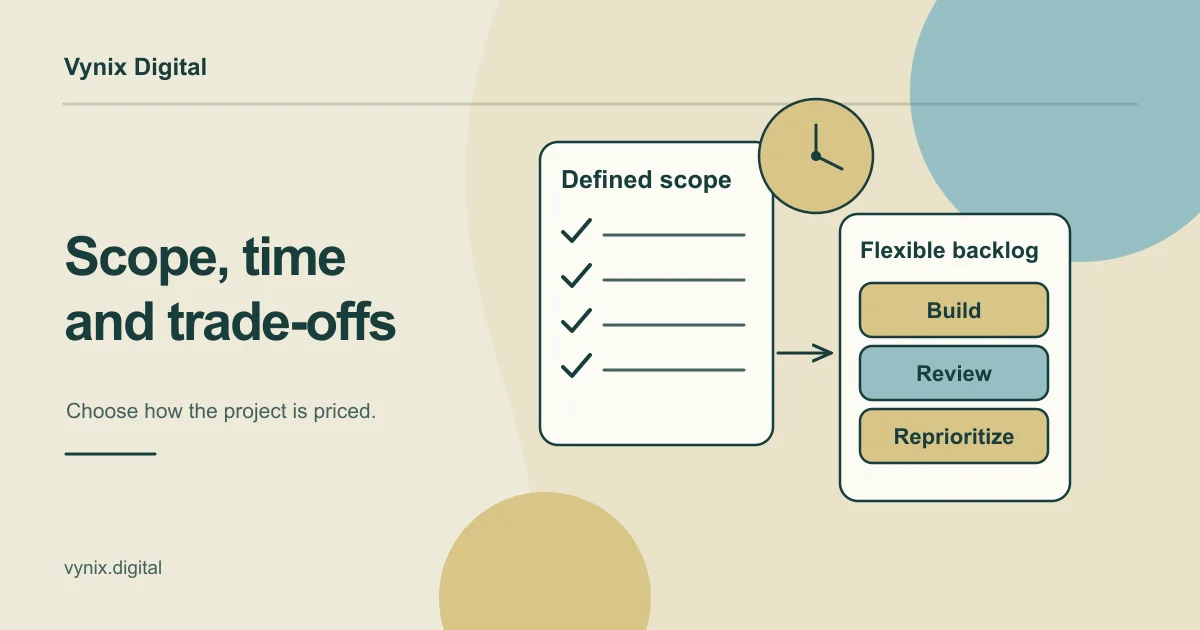
A simple test: if nobody in house can direct developers or review code, staff augmentation is risky. Project-based and dedicated-team setups put more of that responsibility on the vendor. How you pay is a separate question, and our comparison of fixed price vs time and materials contracts explains which billing model suits which kind of project.
Outsourcing vs in-house development
Neither option wins in general. It depends on how central the software is to your business, how long you need the capacity, and whether you can manage engineers.
Outsourcing makes sense when:
- You need to start in weeks, not after a multi-month hiring process.
- The work has a clear end point, or demand will rise and fall.
- You need skills you would only use occasionally, such as DevOps, mobile, or UX research.
- You want a working product before deciding whether to build a permanent team.
In-house is the better bet when the software is your core product, when deep domain knowledge must stay inside the company, or when requirements change daily and need constant contact with other departments.
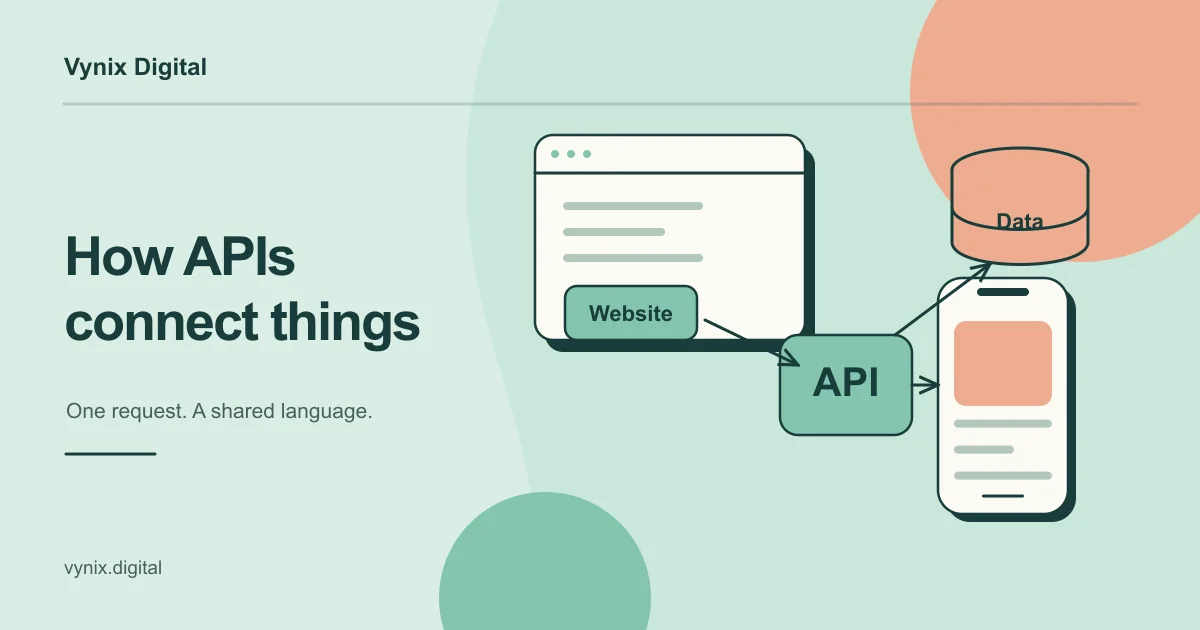
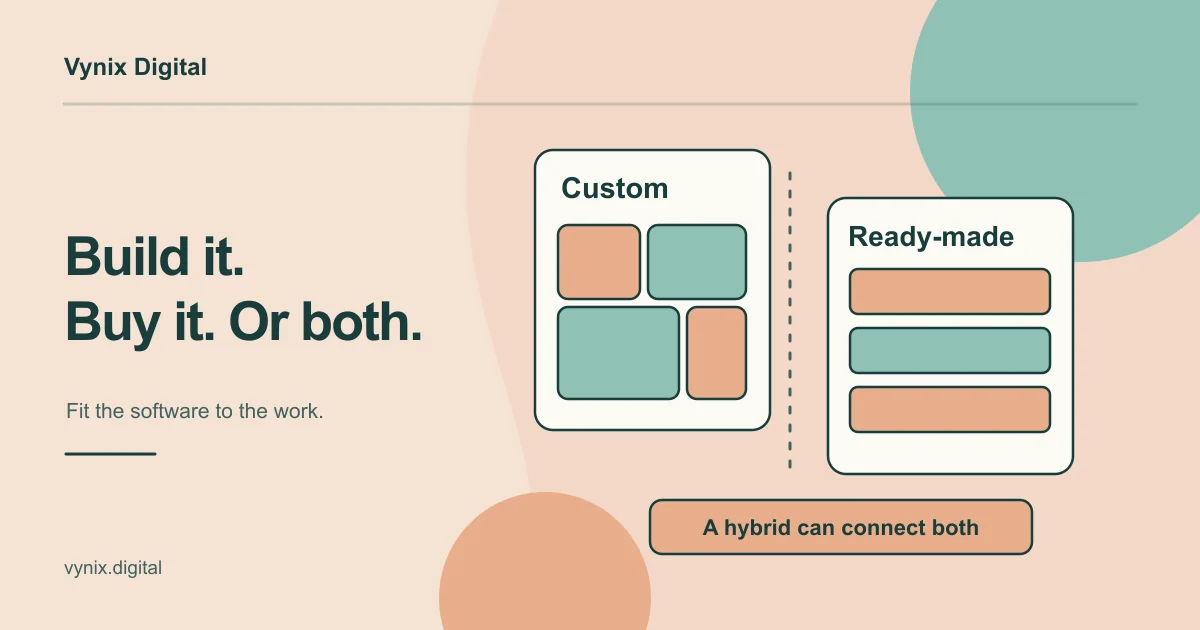
Many companies end up with a hybrid: an in-house product owner or technical lead sets direction, and an outsourced team does most of the building. Internal tools, APIs, and workflow automation are common custom software development projects to hand off this way.
The risks, and how to reduce them
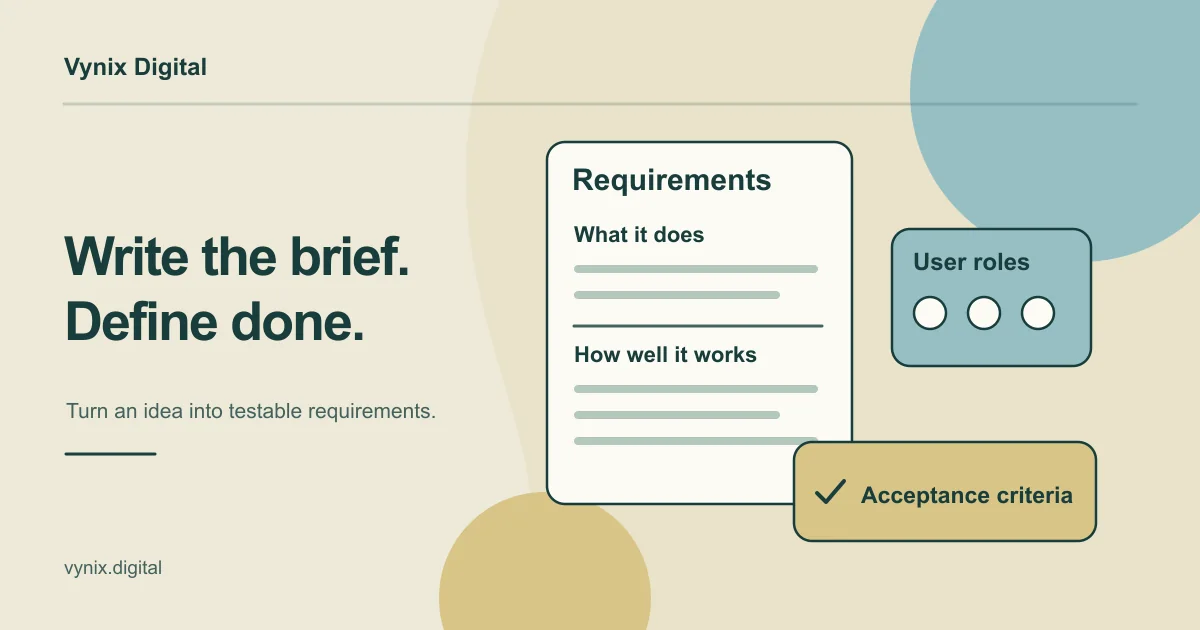
Vague requirements are the usual starting point for trouble. When the brief has gaps, the vendor fills them with assumptions, and you find out at the demo. A written software requirements document removes much of that risk.
Code quality is the next concern. Software can work at launch and still be hard for anyone else to change, so make code reviews, automated tests, and documentation part of the deliverables. Vendor lock-in is the third: if the vendor controls your repository, hosting, and domain, switching is painful. Finally, count your own time. Even a fully managed team needs a few hours a week from someone on your side.
Managing time zones and communication
Time differences are manageable when you plan for them.
- Agree on overlap hours. Two to three shared hours a day covers a standup, questions, and quick decisions. Write them into the statement of work.
- Default to written updates. A short daily note (done, next, blocked) means nobody waits for a meeting to learn the status.
- Keep work in one place. Use one issue tracker and one chat channel, and copy decisions made on calls into the relevant ticket.
- Hold a demo every week or two. Seeing working software catches misunderstandings while they are cheap to fix.
- Name one owner on each side. A single decision-maker for you and a single delivery lead for them prevents conflicting instructions.
A large gap can even help: an offshore team can work through the backlog while you sleep, as long as tickets are clear enough that nobody gets stuck waiting.
IP, contracts, and data basics
What follows is general information, not legal advice, so have a lawyer review the final contract.
Paying for software does not automatically mean you own it. Under US copyright law, commissioned work counts as a “work made for hire” only in a short list of categories set out in section 101 of the Copyright Act, and software is not on that list. Your contract therefore needs a clause that assigns all intellectual property in the code, designs, and documentation to your company. Other countries have their own rules, so the safe habit everywhere is the same: get the assignment in writing.
The documents you will usually sign:
- NDA: protects confidential information shared during sales and discovery.
- Master services agreement (MSA): the umbrella terms, including IP, liability, payment, termination, and governing law.
- Statement of work (SOW): the scope, deliverables, milestones, team, and acceptance criteria for a specific project.
- Data processing agreement (DPA): needed when the vendor handles personal data. Under the GDPR, Article 28 requires a contract covering the subject matter, duration, nature, and purpose of the processing, and requires the processor to act only on your documented instructions.
Also check the handover clause (what you get if the contract ends: source code, credentials, documentation), the warranty period for post-launch defects, the list of open-source libraries and their licenses, and any non-solicitation terms.
How to outsource software development, step by step
- Define the outcome. Write down who the software is for, what it must do, and how you will judge success. One or two pages is enough to begin.
- Choose your models. Pick a location based on how much overlap you need, and an engagement model based on whether you have technical leadership in house.
- Shortlist three to five vendors. Check relevant past work and talk to former clients. Our guide on how to choose a web development company has vetting questions that apply just as well to software vendors.
- Start with paid discovery. A short software discovery phase produces a scope, architecture, and estimate you can trust, and shows you how the vendor works before a large commitment.
- Sign the contract and set the rhythm. Confirm the IP assignment, overlap hours, tools, demo cadence, and who approves what.
- Create accounts in your name. Repository, cloud hosting, domain, app store accounts, and third-party services. Give the vendor access, not ownership.
- Ship a small first milestone. Choose something demoable in a few weeks. It tests communication, quality, and estimates while the stakes are low.
- Review and adjust. Expand the engagement if the milestone went well, and fix the process or change course if it did not.
Common mistakes
- Choosing on hourly rate alone. A cheaper team that needs twice the rework costs more. Compare the total cost of reaching the outcome.
- Skipping discovery. A vague brief turns into change requests and disputes later.
- Letting the vendor own your accounts. If the repository and hosting are in their name, you do not fully control your product.
- Having no technical reviewer. If nobody on your side can check the work, use a project-based model or arrange an independent code review at milestones.
- Hiding the business context. A team that never hears about users or goals makes reasonable guesses that are often wrong.
- Signing a rigid fixed scope for an evolving product. If you expect to learn and change direction, a contract that penalizes every change hurts both sides.
Getting started
Software development outsourcing works when the structure is right: a model that matches your in-house capacity, a written scope, code and accounts that belong to you, and a steady rhythm of demos and written updates. Start small, judge the vendor on a real milestone, and grow from there.
If you are planning a backend, API, SaaS platform, or internal tool, our custom software development work starts with discovery and architecture, so the stack, scope, and timeline are agreed before development begins. You can browse our portfolio for examples, then tell us about your project and we can talk through which outsourcing model fits.